
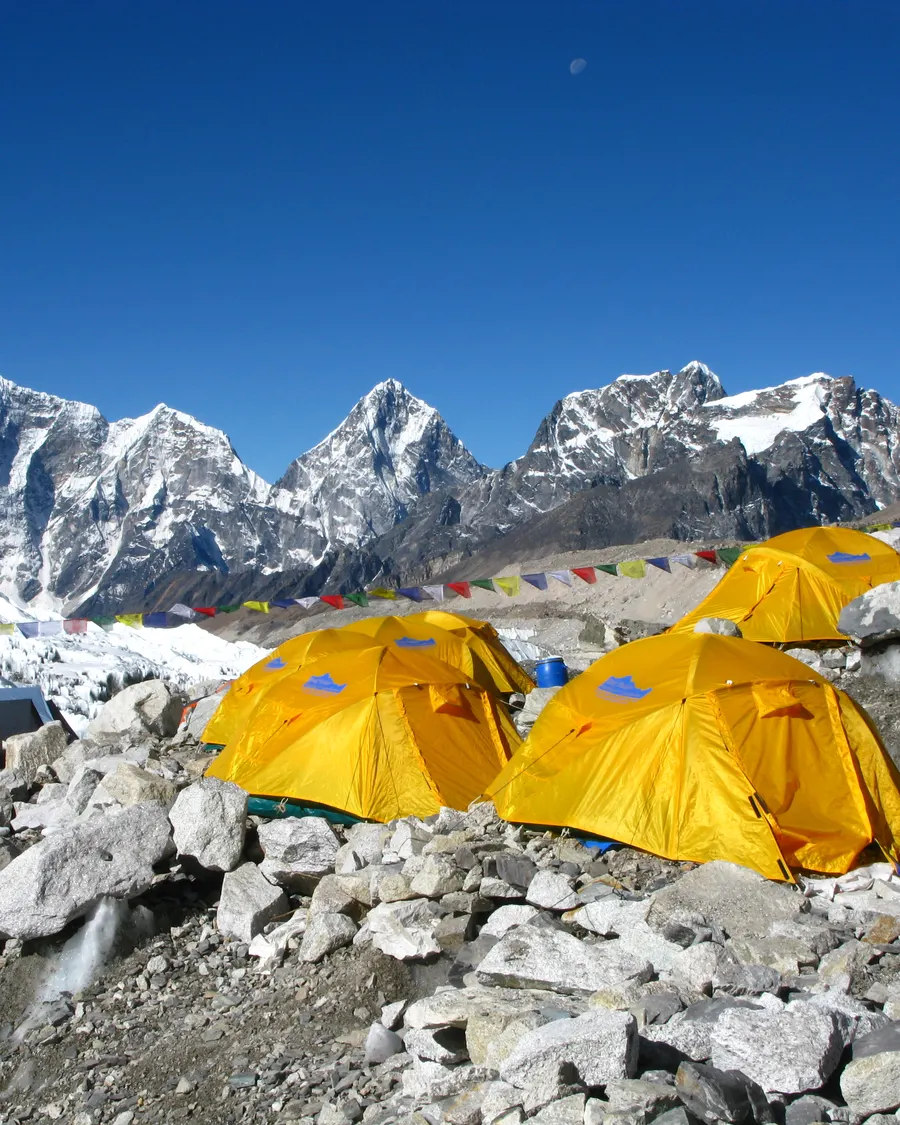
Expedition 0Everest Base Camp, “Same Mountain”
Walk it with the first Thai to stand on the summit of Everest
The trip
Everest, then and now
Nueng has walked this trail fifteen times. Each time the lodges were more comfortable and there was more money on the trail, and less of the quiet he first came for.
On his sixteenth, up to 20 people walk with him. The group stops where people on the trail deal with its waste and its changing weather, and retakes his old photos from the spots where he stood.
“Doi Inthanon is the foot of the Himalayas.”Nueng, translated from Thai
Place
Ice, rock, and the new buildings that now stand in front of the mountains.
People
Sherpa families who live with the change every season.
Act
Time and money spent with the people who look after the trail, starting with goods made from its waste.
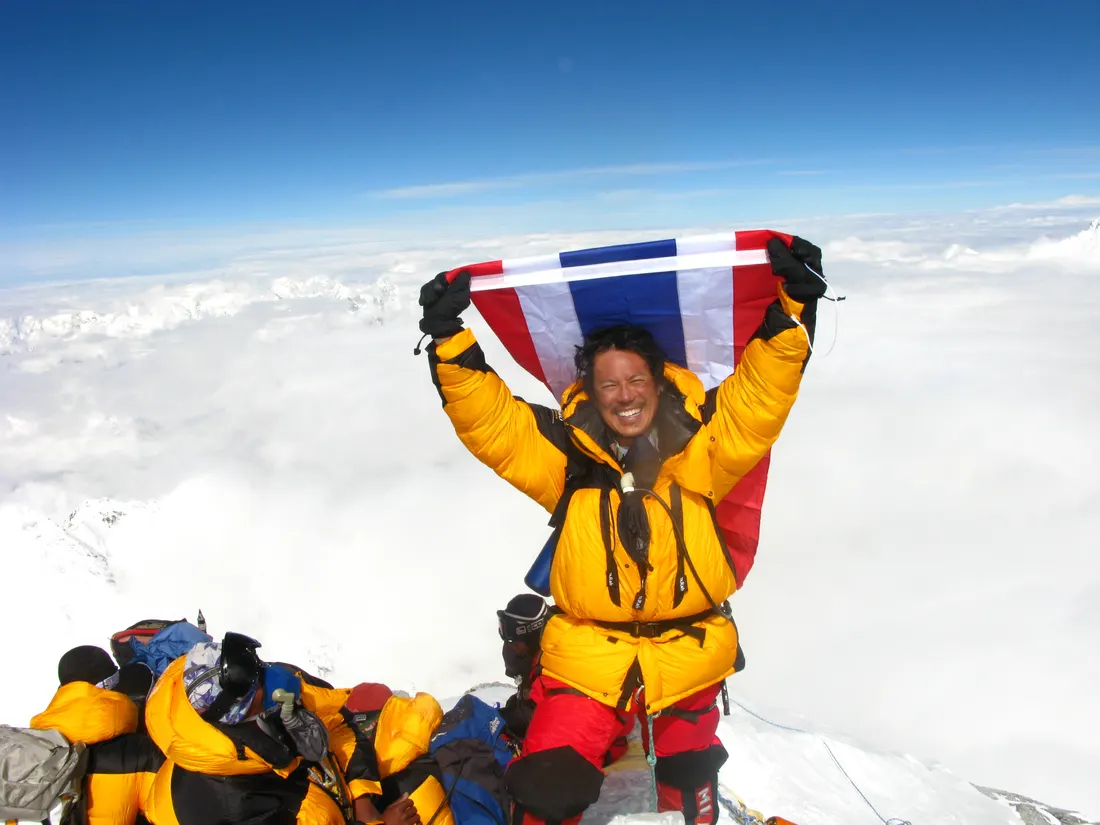
Trip leader
Vitidnan “Nueng” Rojanapanich
- 2008First Thai on the summit of Everest
- 7/7First Thai to climb the Seven Summits
- 16His sixteenth walk to Base Camp
“The best chance to find yourself, through adventure.”
Nueng, translated from Thai

The main activity
Same spot, then and now
Nueng picks old frames from his archive. On the trail the group finds where each was taken, shoots it again from the same angle, and sets the two side by side. The pair below is an example from researchers who did the same in the Khumbu valley.
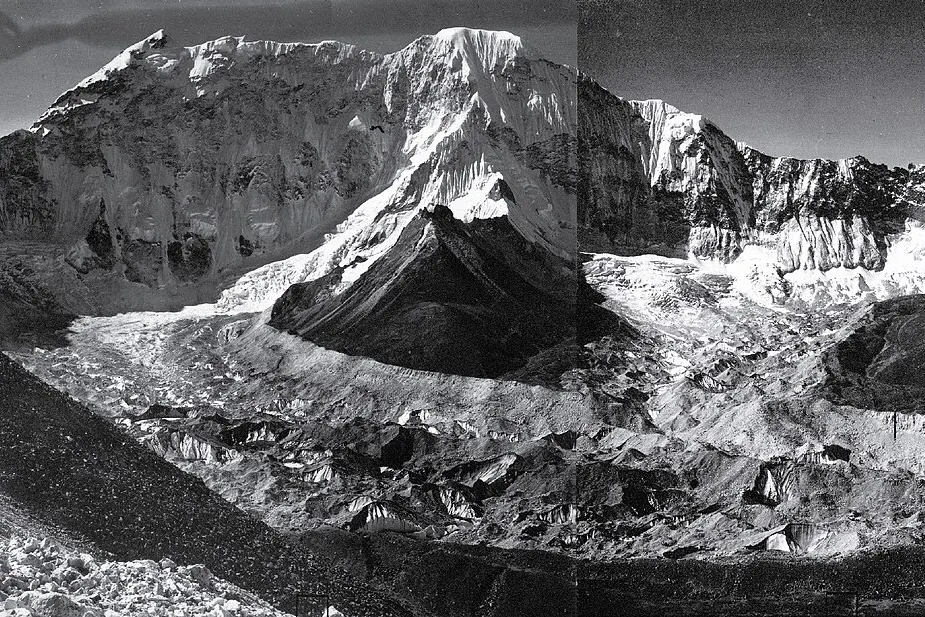 c. 1956
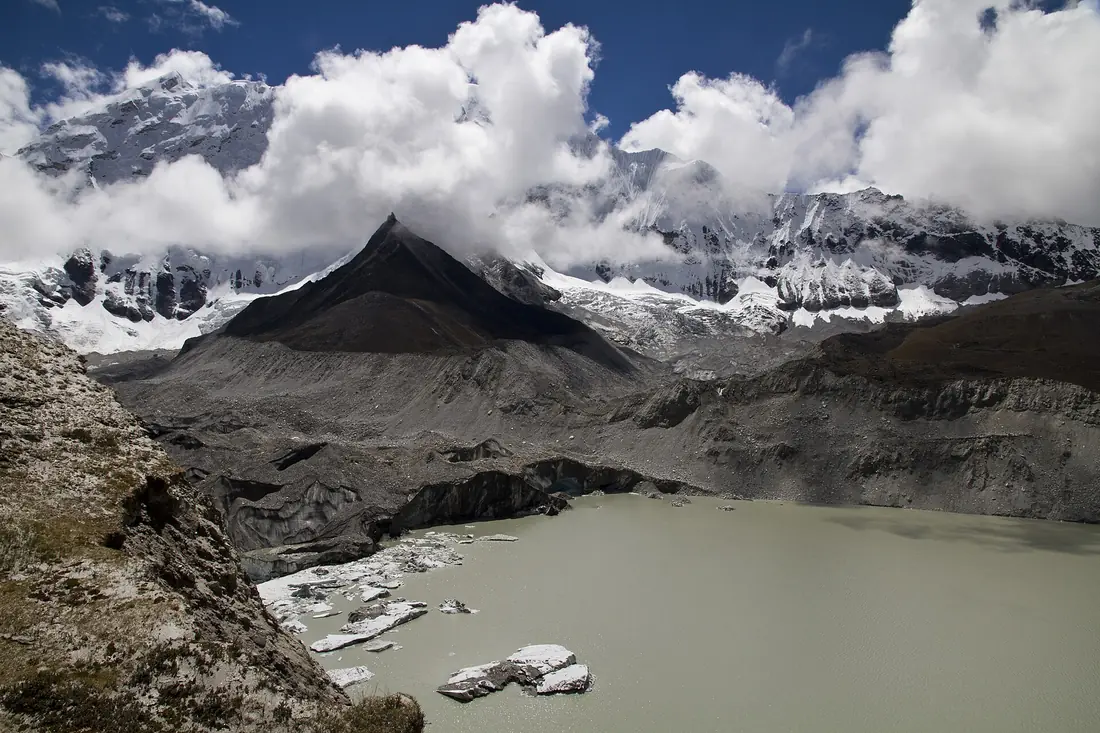 2011
Imja Glacier around 1956, and the lake in its place in 2011 | Courtesy Erwin Schneider / ARGE, Daniel Alton Byers
Himalayan glaciers lost ice about 65% faster in 2011-2020 than in the decade before.
ICIMOD, 2023
Nepal's share of global greenhouse gas emissions. It is among the countries hit hardest by warming.
Figure as Nueng gives it
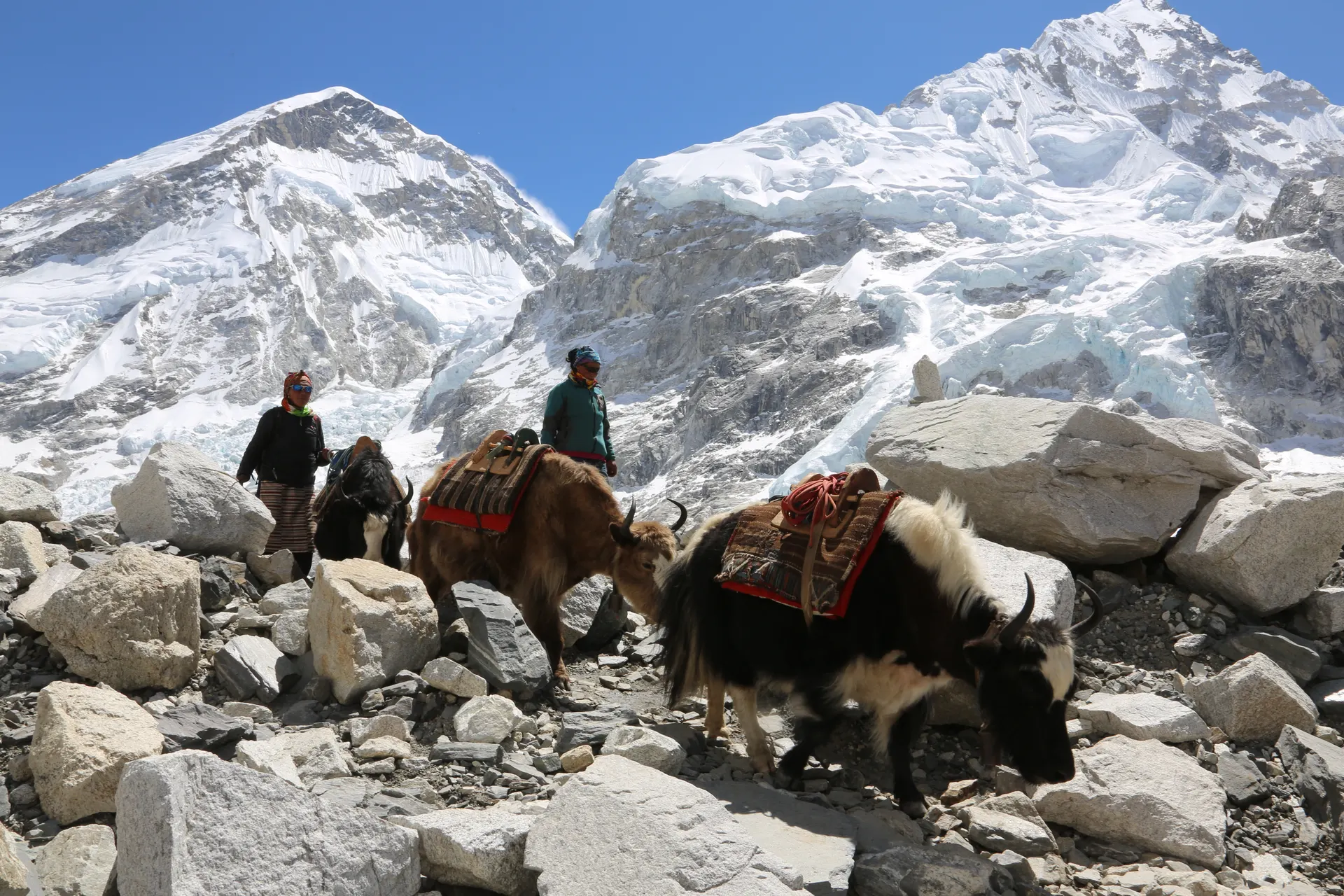
Day 5 · Syangboche · 3,775 m
Sagarmatha Next
Some of the Everest trail's waste ends up here, and leaves as art and everyday things.
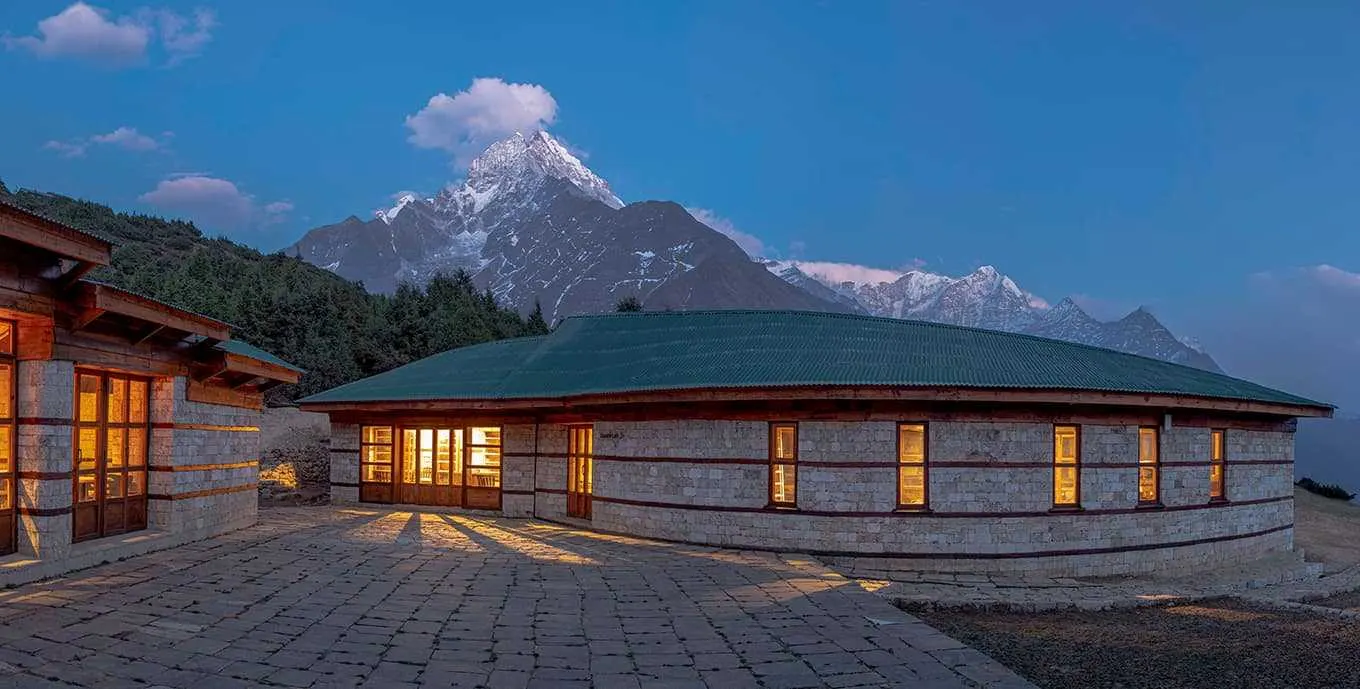
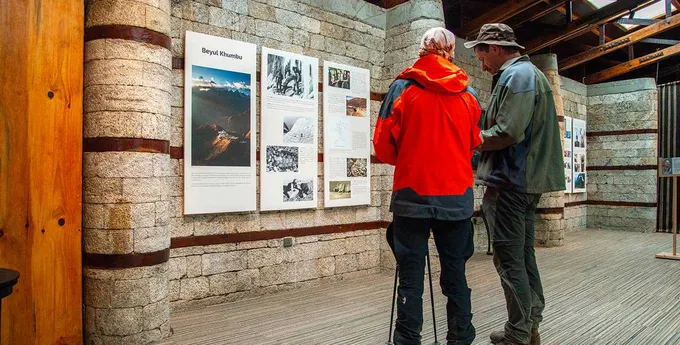
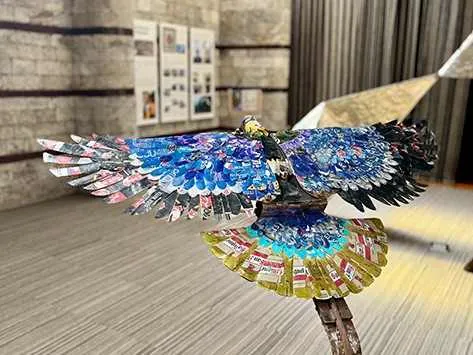
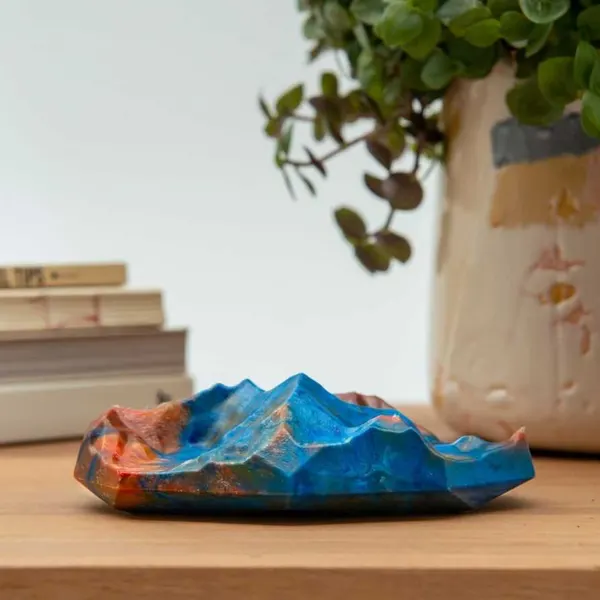
Photos: Sagarmatha Next
What it is
A waste and climate centre above Namche, opened in 2022: exhibits, art made from trail waste, a plastics lab and a shop.
Why stop
The Khumbu valley produces around 200-400 tonnes of waste a year. This is where you see where it goes and what it can become.
What we do
One to two hours on the acclimatisation day at Namche: watch bottle caps being moulded, talk to the team, buy something made from waste.
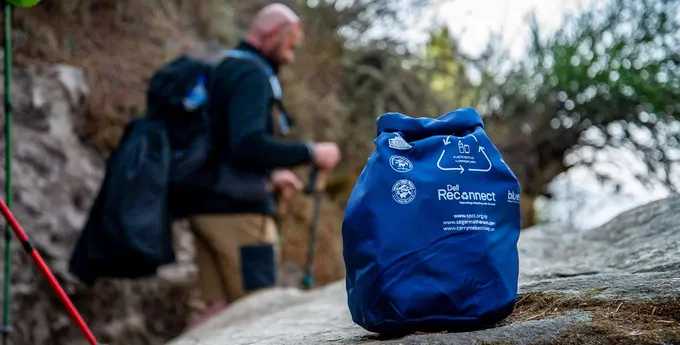
Anyone who wants to can carry a 1 kg Carry Me Back bag down to Lukla. It is optional. In 2024 around 10,500 trekkers carried 14,263 kg down this way.
On the way
A village, a monastery, Base Camp
-
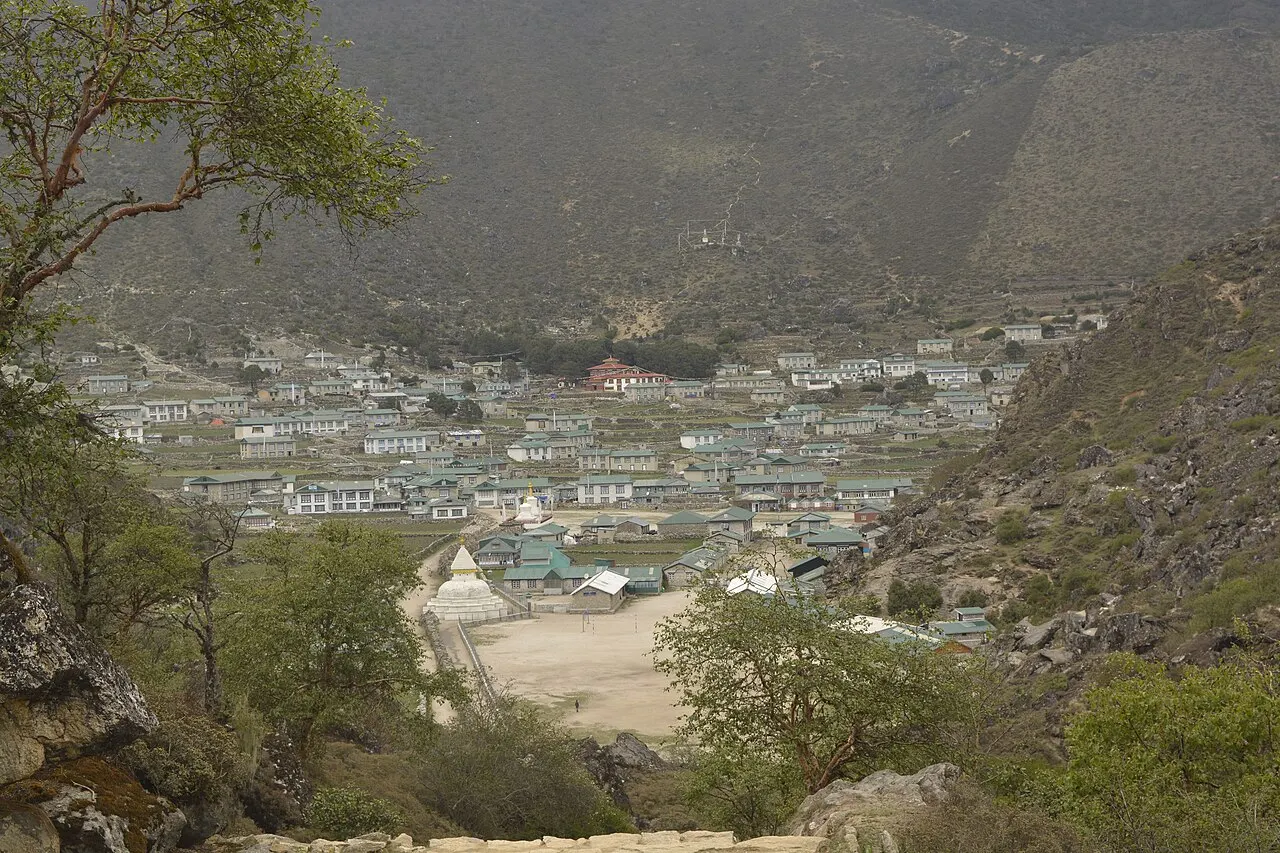
Khumjung 3,790 m
Day 5
The largest Sherpa village in the Khumbu, with the school Edmund Hillary founded in 1961. Tea with a family Nueng knows.
-
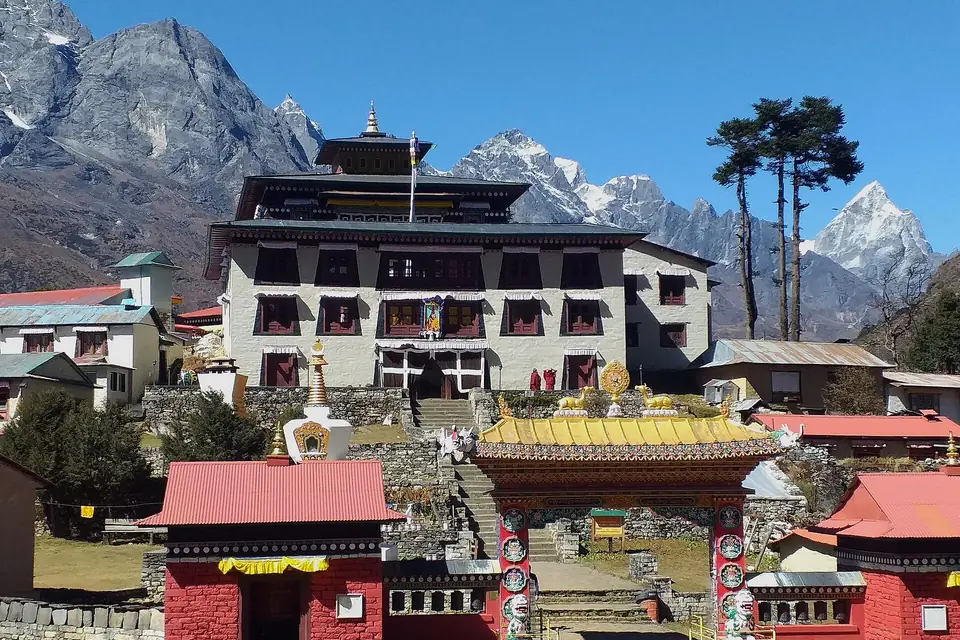
Tengboche 3,860 m
Day 6
The largest monastery in the Khumbu. We sleep here, sit in the afternoon puja, and ask for a blessing for the group before the high days.
-
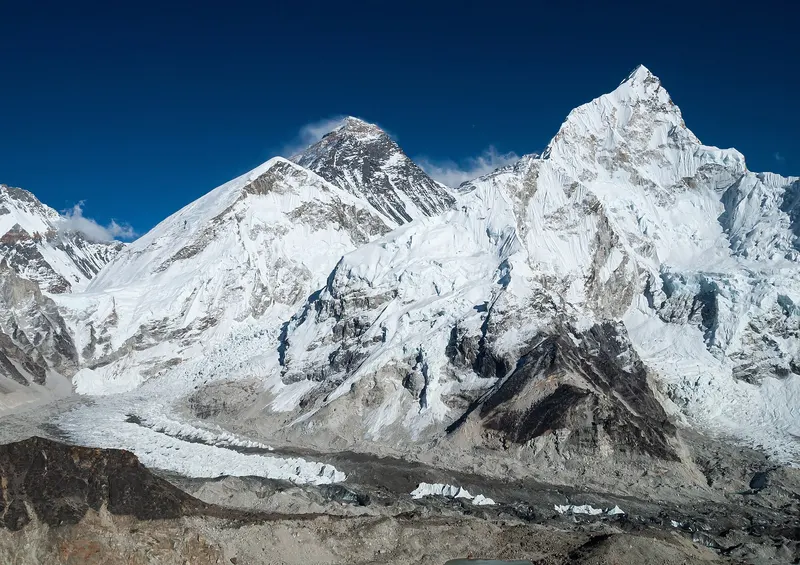
Base Camp 5,364 m
Days 10-11
One night in tents near Base Camp, and a climb up Kala Patthar for the view of Everest. The two days can swap with the weather.
Photos: Meetkakadiya8, Arnav shk (CC BY-SA 4.0), Vyacheslav Argenberg (CC BY 4.0), via Wikimedia Commons
How it differs from a usual trek
| A usual trek | Expedition 0 |
|---|---|
| The goal is reaching Base Camp | The goal is seeing what changed |
| Rest day: walk up a hill and back | Rest day: Sagarmatha Next and Khumjung |
| A photo at the Base Camp sign | Nueng's old frames, shot again on the spot |
| Tengboche at lunch | A night at Tengboche and the puja |
| The guide the agency sends | Someone who has walked it fifteen times |
Every stop falls on a day already in the route. No extra days.
The route, 18 days
Kathmandu → Lukla → Base Camp 5,364 m → Kathmandu
Day 1Day 10 · 5,364 mDay 18
| Day | Sleep | m | On the day |
|---|---|---|---|
| 1-2 | Kathmandu | 1,400 | Arrive, prepare |
| 3 | Phakding | 2,620 | Fly to Lukla and start walking |
| 4-5 | Namche | 3,440 | Acclimatisation day: Sagarmatha Next and Khumjung |
| 6 | Tengboche | 3,860 | Tengboche monastery and the afternoon puja |
| 7-8 | Dingboche | 4,410 | Acclimatisation hike, a then-and-now frame |
| 9 | Lobuche | 4,920 | Past the climbers' memorials at Thukla |
| 10-11 | Base Camp, Gorak Shep | 5,364 | A tent night near Base Camp, and Kala Patthar |
| 12-13 | Pangboche, Namche | 3,930 | Walk down |
| 14 | Phakding | 2,620 | Walk down |
| 15 | Lukla | 2,850 | Last night on the trail |
| 16-18 | Kathmandu | 1,400 | Morning flight back, rest, celebrate, fly home |
The plan can change with the weather and conditions on the mountain. The guide decides on the day, for the safety of the group.
Who runs the trip
Namgyal
The Nepali trekking team that runs the route: guide, assistant guide, porters, staff insurance and the medical kit. You pay them directly.
Nueng
Walks with the group the whole way and leads the then-and-now photos.
OUTSIDERS
Plans the trip, keeps the interest list, and publishes the story of the trip afterwards.
After you sign up
- Now
Leave your name and a LINE ID or email
- December 2026
The list gets dates and price before anyone else
- Late December
Start the training plan we send
- January 2027
Confirm you are going
- February 2027
Pay the Namgyal team
- March 2027
Set off
Questions
How fit do I need to be?
You don't need climbing experience, but you need to train. You get a training plan before the trip, and the team trains with you in Nepal.
What does it cost?
The list gets the price first, once the team in Nepal confirms it.
Who do I pay?
The Namgyal team in Nepal, directly, by February 2027.
How cold is it in March?
Nights at Base Camp run around −10 to −20 °C. The kit list comes with the training plan.
Want to walk with us? Leave your name and we'll send dates and costs before they're announced.
You're on the list. We'll send trip details to the LINE or email you gave.
Or DM @outsiders.th